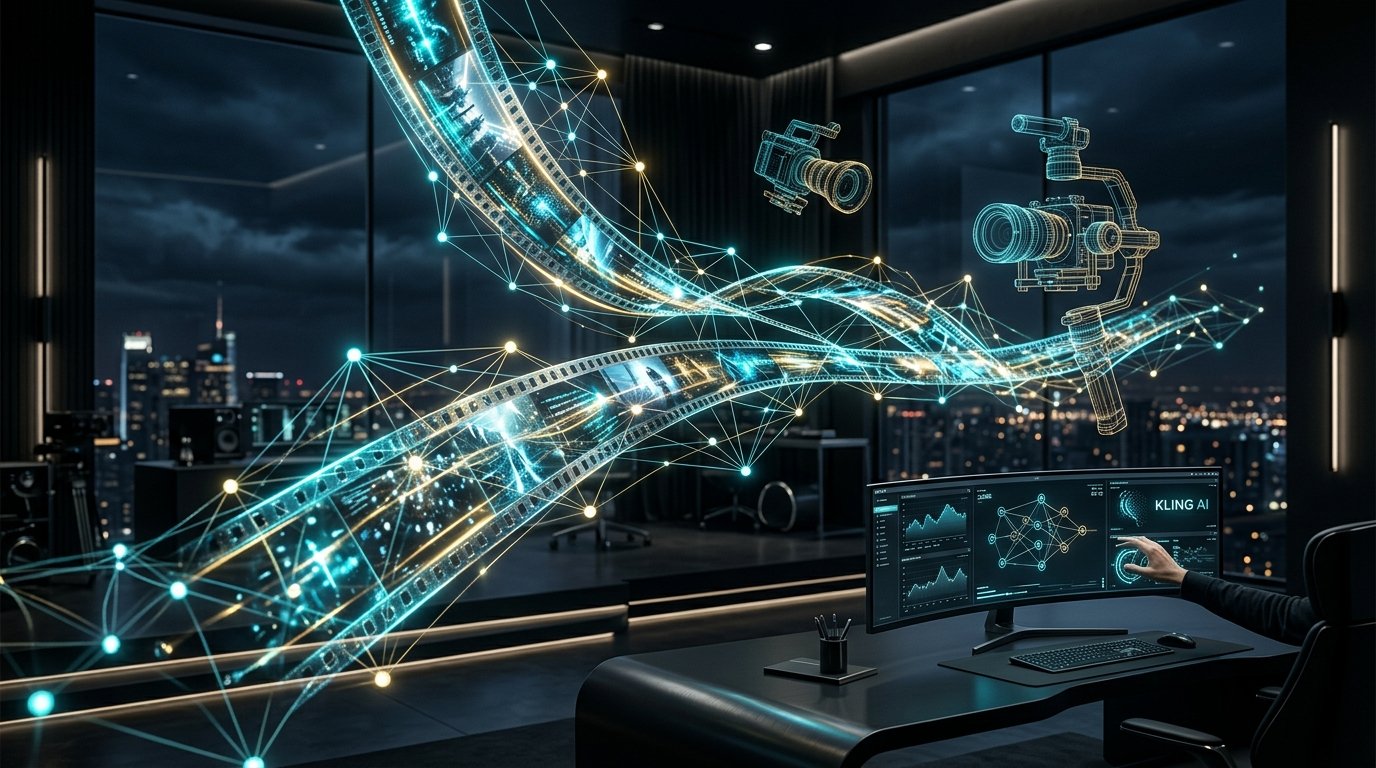
Kling AI free access allows digital creators, visual designers, and enterprise media teams to generate cinematic, physics-compliant 1080p AI videos up to 10 seconds in duration using daily platform credits without requiring an immediate paid subscription.
Developed by Chinese tech giant Kuaishou Technology and launched globally across both web and mobile environments, Kling AI has emerged as one of the most credible consumer-facing alternatives to closed enterprise models like OpenAI's Sora and Runway's Gen-3 Alpha. While early video diffusion models struggled with rubbery limbs, drifting backgrounds, and erratic motion blur, Kling AI's breakthrough lies in its ability to simulate real-world classical mechanics—rendering gravity, momentum, fluid turbulence, and complex facial expressions with startling consistency. To test prompts directly, creators can access the official Kling AI platform and begin exploring its generative suite.
Core Capabilities: Text-to-Video, Image-to-Video & Motion Brush
Kling AI operates across two core generation modalities complemented by granular cinematic directing tools that distinguish it from raw text-prompt video engines:
- Text-to-Video (T2V): Converts dense natural language descriptions into high-definition video sequences at 30 frames per second (fps). The model accurately parses complex cinematic direction, including focal length, lighting conditions, and multi-subject choreographies.
- Image-to-Video (I2V): Animates static high-resolution concept art, photography, or 3D renders while preserving the exact subject identity, color palette, and architectural fidelity. This pairs seamlessly with character assets created in platforms like the Viggle AI character motion engine or multi-subject renders refined through the Remaker AI face swap ecosystem.
- Advanced Motion Brush: Enables creators to manually paint specific regions of a static image (such as flowing water, drifting clouds, or fluttering garments) and assign precise motion vectors (horizontal, vertical, or circular velocity) while keeping the rest of the canvas completely locked.
- Dynamic Camera Controls: Supports virtual camera trajectories including Pan Left/Right, Tilt Up/Down, Zoom In/Out, and Roll rotations with customizable acceleration curves.
Architectural Insight: 3D Spatiotemporal Attention & Diffusion Transformers (DiT)
Unlike legacy 2D frame-interpolation pipelines that suffer from temporal jitter and anatomical morphing, Kling AI deploys an end-to-end 3D Spatiotemporal Joint Attention mechanism built on a scalable Diffusion Transformer (DiT) backbone. By treating video as a continuous 3D volume (X, Y, Time), the model processes spatial structure and motion physics simultaneously. This preserves rigid-body dynamics—such as fluid splash trajectory, hair movement against wind, and optical light refraction—without hallucinating extraneous limbs across consecutive frames.
Kling AI Pricing Tiers & Credit Allocation Matrix
Understanding the credit economy is crucial for navigating Kling AI effectively. The platform utilizes a daily replenishment model for free users alongside monthly subscription packages for studio volume:
| Plan / Tier | Monthly Cost | Credit Allowance | Key Features & Limits |
|---|---|---|---|
| Kling Free Tier | $0 / Free | 66 Daily Credits (Reset at 00:00 UTC) | Standard Mode (720p/1080p), 5s clips, default queue, platform watermark |
| Standard Tier | $10 / Month | 660 Monthly Credits (Stackable) | Professional Mode unlocked, 10s video extension, watermark removal, priority queue |
| Pro Tier | $37 / Month | 3,000 Monthly Credits | High-speed pipeline, multi-camera trajectory pathing, full Motion Brush access |
| Premier Tier | $92 / Month | 8,000 Monthly Credits | Dedicated cluster computing, ultra-fast generation, enterprise commercial licensing |
Step-by-Step Guide: How to Get and Maximize Kling AI Free Credits
Leveraging Kling AI at zero cost requires strategic prompt crafting and resource management. Follow this workflow to maximize your daily credit quota:
- Account Registration: Navigate to the web portal and register using your Google account or email. Upon successful authentication, your account automatically receives an initial allotment of 66 credits.
- Select "Standard Mode": Kling AI provides two computation engines: Standard Mode (which consumes 10 credits for a 5-second generation) and Professional Mode (which costs 35 credits). To produce up to 6 distinct video clips per day, remain strictly within Standard Mode.
- Daily Replenishment Timing: Free credits do not roll over or stack. Unused credits reset to 66 each day at 00:00 UTC, meaning consistency is key to accumulating production footage over time.
- Image-to-Video Efficiency: If you have precise artistic control in mind, generate a pristine hero image first in Midjourney, Flux, or Stable Diffusion, and upload it into Kling's I2V pipeline. This drastically cuts down on wasted rerolls compared to open-ended text prompts.
- Audio Scoring Integration: Once your video clips are generated, export them into modern AI audio pipelines such as the Suno AI audio generation platform to compose customized cinematic soundtracks, or automate asset staging with tools like the Blackbox AI code generation suite.
High-CTR Prompt Engineering Formulas for Cinematic Video
To prevent prompt bloat and elicit maximum physical adherence from Kling AI's neural weights, structure your prompts into four distinct semantic modules: [Subject Action] + [Camera Motion] + [Environment & Lighting] + [Aesthetic & Lens].
Example Prompt 1 (Hyper-Realistic Human Character):
Cinematic close-up portrait of a weary astronaut taking off their helmet inside an airlock, subtle condensation dripping down the glass visor, ambient amber emergency lighting, slow push-in dolly camera movement, shallow depth of field, 35mm anamorphic lens, hyper-realistic skin textures, 8k photorealistic.
Example Prompt 2 (Complex Physical Dynamics):
High-speed tracking shot of a matte-black sports car drifting through rain-soaked neon Tokyo asphalt at midnight, water droplets splashing off the wide tires, volumetric fog reflecting magenta neon lights, smooth orbital drone camera, hyper-realistic reflections, fluid physical simulation.
Conclusion
The emergence of Kling AI represents a pivotal evolutionary leap in consumer-accessible generative media, successfully bridging the gap between theoretical research demonstrations and production-ready creative workflows. By providing a dependable Kling AI free tier with daily replenished credits, Kuaishou has lowered the financial barrier to entry, empowering independent artists, commercial agencies, and hobbyists to test cutting-edge diffusion transformers without committing to expensive software retainers. While free tier limitations—such as non-stacking credits, queue delays during peak computational hours, and output watermarking—inevitably steer high-throughput enterprises toward paid subscriptions, the core engine remains remarkably capable for rapid prototyping, storyboard visualization, and social content generation. As multimodal competition intensifies across the artificial intelligence sector, platforms that balance high-fidelity physical simulation with democratic access will dictate the trajectory of modern digital storytelling. Creators who master Kling AI's prompt syntax, camera trajectories, and negative conditioning parameters today will command an indispensable competitive advantage across the next generation of synthetic cinema and interactive media production.
Frequently Asked Questions (FAQ)
Is Kling AI completely free to use?
Yes, Kling AI provides a free tier that grants 66 complimentary credits every day to all registered accounts. These credits reset at 00:00 UTC and allow users to generate up to 6 five-second video clips daily in Standard Mode without entering credit card details.
Do Kling AI free credits roll over or stack?
No, daily free credits do not roll over or accumulate if unused. They reset precisely back to 66 credits at midnight UTC, so users must spend their daily allocation within each 24-hour cycle to maximize their creative output.
How does Kling AI compare to OpenAI's Sora and Runway Gen-3?
While Sora remains restricted to enterprise research partners and Runway Gen-3 operates on premium credit meters, Kling AI offers comparable physical adherence and 1080p resolution while maintaining an accessible daily free tier and superior complex object physics simulation.
Can videos generated on the Kling AI free tier be used commercially?
Videos generated under the free tier include a discreet Kling AI watermark in the corner and are primarily intended for personal exploration and non-commercial portfolio use. Commercial distribution rights and watermark removal require a paid subscription tier.
What is the difference between Standard Mode and Professional Mode?
Standard Mode costs 10 credits per generation and generates 720p/1080p video with fast processing times. Professional Mode costs 35 credits per generation and utilizes an enhanced parameter checkpoint that calculates richer motion dynamics, advanced lighting consistency, and subtle micro-movements.

Abdul Samad
Founder and Lead Search Strategist at BacklinkBlend. Based in Hyderabad, Pakistan, Abdul Samad has over 6 years of hands-on experience in organic link building architectures, technical SEO diagnostics, Generative Engine Optimization (GEO), and algorithmic search audits.