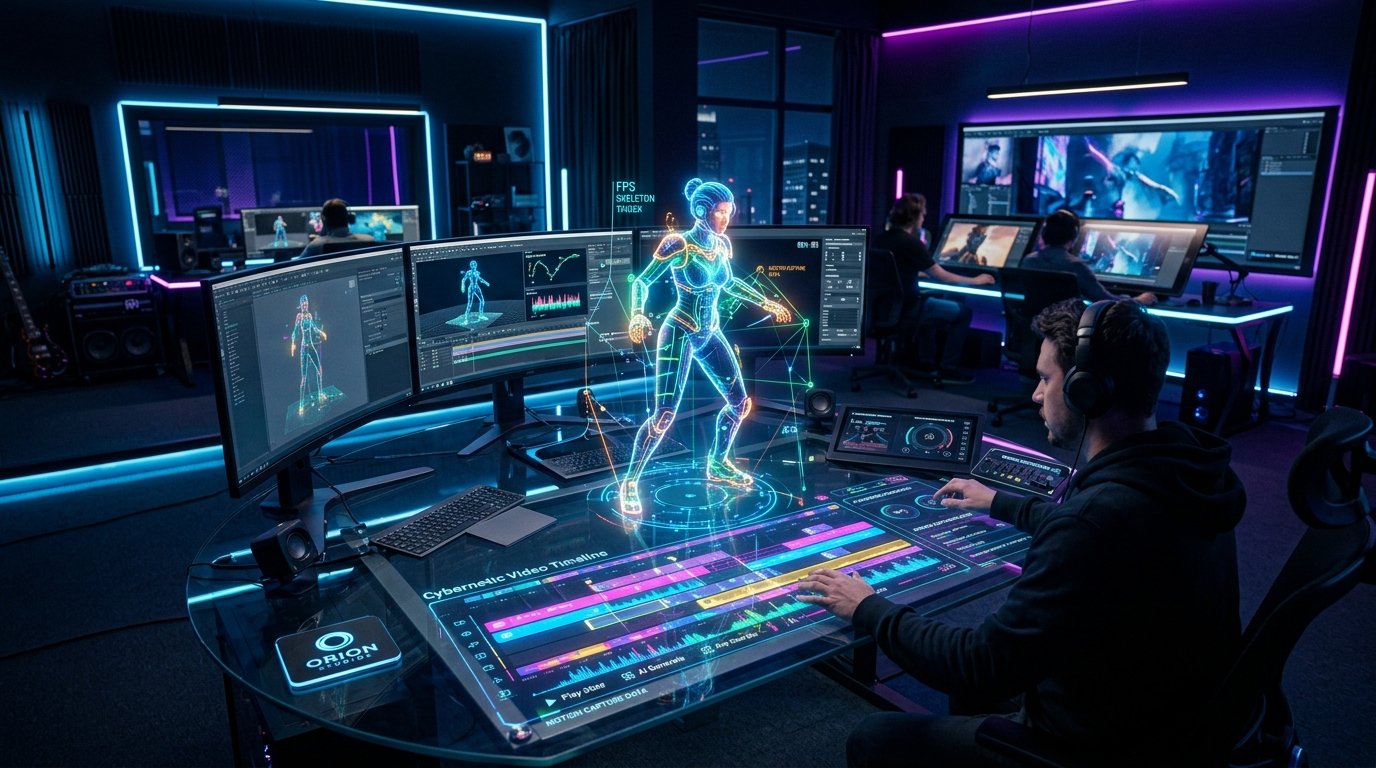
Viggle AI is a controllable generative video platform that leverages physics-grounded 3D foundation models to transfer complex human movement, choreography, and natural language motion prompts onto static character images without manual rigging.
Traditional generative video synthesis has long suffered from a persistent structural flaw: character hallucination and temporal inconsistency. While conventional text-to-video diffusion models can generate visually stunning landscapes or abstract scenes, they routinely struggle with deterministic character control. Limbs detach, faces morph between frames, and precise physical choreography disintegrates into probabilistic noise. In digital filmmaking, game animation, and commercial social media production, creators do not merely require randomized visual motion; they require precise, repeatable kinematic direction.
Viggle AI directly resolves this bottleneck. Driven by its proprietary JST-1 foundation model, the system merges computational physics with generative computer vision. Rather than treating video generation as a sequence of isolated pixels, Viggle calculates underlying skeletal geometry, joint constraints, and physical gravity before synthesizing frames. The result is unprecedented character consistency that bridges the gap between static concept art and production-ready video animation.
1. Foundation Model Architecture: How the JST-1 Physics Engine Operates
At the core of Viggle AI's technical breakthrough lies the JST-1 (Jhyff Video-3D) foundation model. Unlike general-purpose diffusion models trained primarily on two-dimensional video rasters, JST-1 is explicitly trained on structured 3D spatial representations and biomechanical motion vectors.
When a creator uploads a character image and pairs it with a reference motion clip or prompt, JST-1 executes a multi-stage synthesis pipeline:
- Character Disentanglement & Segmentation: The model isolates the primary character from the source background, building a temporary semantic map of facial landmarks, limb joints, and garment boundaries.
- 3D Skeletal Rig Estimation: JST-1 projects a dynamic three-dimensional skeletal armature onto the two-dimensional image, establishing biomechanical joints with rigid bone lengths and angular rotation limits.
- Kinematic Motion Retargeting: When transferring motion from a reference video, the engine extracts skeletal motion capture data, retargeting joint angles to match the proportions of the character.
- Physics-Constrained Neural Inpainting: Rather than interpolating pixels arbitrarily, the model synthesizes clothing folds, hair secondary motion, and muscle deformation in compliance with simulated gravitational and inertial constraints.
This architecture represents a fundamental shift in advancements in generative artificial intelligence, replacing brute-force pixel probability with structured geometric reasoning.
2. Core Operational Modes: Deconstructing Mix, Animate, Ideate, and Stylize
Viggle AI delivers its generative capabilities through four primary operational workflows, accessible through its web application and Discord bot:
- Mix Mode (/mix): The platform's flagship feature. Creators upload a static character image alongside a reference video (such as a viral dance, athletic stunt, or theatrical monologue). Viggle maps the exact real-world choreography from the video directly onto the character, preserving background environment or replacing it with solid greenscreen color.
- Animate Mode (/animate): Allows creators to animate static portraits using natural language prompts without requiring reference video footage (e.g., "character executing a slow martial arts kick with fluid footwork").
- Ideate Mode (/ideate): Pure text-to-video generation that creates both the character and the motion sequence simultaneously from a text description.
- Stylize Mode (/stylize): Re-skins human performers in existing video footage into 2D anime illustrations, 3D stylized game avatars, or claymation figures while maintaining micro-movements and facial cadence.
Editorial Insight: The 3D Skeletal Data Export Pipeline
Beyond exporting 2D MP4 video clips, enterprise iterations of Viggle AI extract raw skeletal animation data into industry-standard FBX and GLB formats. This transforms Viggle into an accessible, markerless motion-capture pipeline for indie game developers using Unreal Engine 5 or Unity, bypassing the requirement for dedicated mocap suits.
3. Motion Prompt Engineering: Crafting Controllable Kinematic Instructions
While Mix mode relies on visual reference videos, utilizing Animate and Ideate modes effectively demands specialized motion prompt engineering. Standard descriptive prompts that succeed in text-to-image models (such as lighting or textural adjectives) often fail to steer temporal pacing in video models.
To achieve clean physical output, apply these prompt construction principles:
- Specify Kinematic Trajectory: Define directional movement explicitly (e.g., "advancing forward 3 steps, pivoting 90 degrees to the left, and coming to a balanced rest").
- Designate Pacing and Cadence: Use tempo descriptors (e.g., "explosive initial acceleration followed by smooth deceleration") to prevent unnatural robotic gliding.
- Isolate Camera vs. Subject Motion: Separate the camera path from character movement to avoid parallax warping. State whether the camera is static, panning, or tracking at eye-level.
For creators generating source character portraits prior to animation, review our technical blueprint on mastering AI image generator prompts to ensure clean limb separation and high-contrast silhouettes.
4. Viggle AI 2026 Pricing, Access Tiers, and Commercial Licensing
Viggle operates on a freemium credit subscription model across its web application (official Viggle.ai web workspace) and Discord platform. Below is the verified breakdown of feature allocations, resolution benchmarks, and licensing rights:
| Plan Tier | Pricing (2026) | Resolution & Speed | Key Inclusions & Commercial Rights |
|---|---|---|---|
| Free Tier | $0 / month | 720p HD, standard queue | Daily free credits, watermarked exports, personal non-commercial use |
| Creator / Pro | $9.99 / month | 1080p FHD, fast queue | No watermarks, 80+ fast credits, multi-character scenes, commercial rights |
| Live & Streamer | $19.99 / month | 1080p 60fps low-latency | Viggle Live webcam motion transfer, Twitch/OBS virtual camera integration |
| Enterprise / Studio | Custom / ~$63.99/mo | 4K upscaling, dedicated GPU | REST API endpoints, FBX/GLB mocap exports, multi-seat team governance |
5. Studio Integration Workflows: Combining Viggle with Generative Toolchains
High-performing digital studios rarely deploy Viggle AI as an isolated tool. Instead, it operates as the motion-synthesis layer within a modular production pipeline:
- Character Pre-Visualization: Artists generate static concept character turnarounds using Midjourney or the Deep AI image generator character creation engine, ensuring consistent costume details.
- Greenscreen Animation Export: In Viggle, select the solid green background preset during
/mixrendering. This outputs clean alpha channels ready for composite keying in After Effects or DaVinci Resolve. - Environmental Background Synthesis: Generate cinematic virtual sets with camera trajectories using Luma Dream Machine generative camera physics or compare scene consistency against Hailuo AI video generation benchmarks.
- Post-Processing & Audio Sync: Composite the keyed character onto the virtual background, align timing with dialogue stems, and perform color grading to blend lighting values.
6. Kinematic Benchmarks: Viggle AI vs. Diffusion-Based Video Generators
Understanding the architectural distinction between Viggle AI and conventional diffusion-based video engines is critical for production directors. While models like OpenAI Sora or Runway Gen-3 excel at high-fidelity cinematic realism, photorealistic lighting, and atmospheric complexity, they treat characters as part of the broader pixel field. When directed to execute a specific 16-count dance routine or precise sword strike, diffusion engines frequently hallucinate incorrect limb counts or drop object consistency.
Viggle AI trades off arbitrary scene generation in favor of deterministic computational kinematics. By isolating the character and anchoring movements to skeletal constraints derived from traditional motion capture (mocap) technology, Viggle delivers predictable results that can be reviewed, edited, and approved under strict production deadlines.
Conclusion
The continuous evolution of viggle ai marks a significant milestone in generative computer graphics, transitioning video creation from unpredictable probabilistic text prompts to deterministic kinematic control. By grounding character motion synthesis in the physics-informed JST-1 foundation model, Viggle resolves the temporal jitter, anatomy drift, and limb warping that historically crippled generative video pipelines. Digital animators, independent game developers, and social marketing teams no longer need costly motion-capture hardware or weeks of manual 3D keyframing to produce convincing character performances. Static concept art can be animated in minutes by mapping reference motion clips or specifying natural language actions. As real-time capabilities like Viggle Live and multi-track spatial editing mature, controllable character synthesis will become standard across virtual production and interactive streaming. To maximize creative output, creators should prioritize high-contrast character inputs, leverage clean reference motion footage, and pair motion transfer engines with high-resolution image generators. Mastering these controllable AI workflows ensures that content teams remain agile, technically competitive, and capable of executing complex visual storytelling at digital scale.
Frequently Asked Questions (FAQ)
What is Viggle AI and how does it animate characters?
Viggle AI is an AI video platform driven by the JST-1 physics-based model. It estimates 3D skeletal geometry from static character images and transfers movement from reference videos or text prompts without requiring manual 3D rigging.
Is Viggle AI free to use, and what are the limitations?
Yes. Viggle AI offers a free tier with daily generation credits, 720p resolution, and watermarked outputs. Paid plans starting at $9.99/month unlock watermark-free 1080p exports, faster rendering, and commercial licensing.
Can creators use Viggle AI without Discord?
Yes. While Viggle AI initially launched as a Discord bot, it provides a comprehensive standalone web application at Viggle.ai with visual timeline tools and direct file upload capabilities.
Does Viggle AI support custom 3D avatars, anime characters, and commercial projects?
Yes. The JST-1 engine animates 2D illustrations, 3D character renders, and photorealistic human portraits. Paid subscribers receive commercial usage rights for social media campaigns, gaming assets, and commercial advertising.
How does Viggle AI differ from general AI video models like Sora or Runway?
General models generate complete scenes through probabilistic diffusion, often causing character morphology changes. Viggle focuses explicitly on controllable character kinematics, anchoring motion to skeletal vectors for deterministic physical consistency.

Abdul Samad
Founder and Lead Search Strategist at BacklinkBlend. Based in Hyderabad, Pakistan, Abdul Samad has over 6 years of hands-on experience in organic link building architectures, technical SEO diagnostics, Generative Engine Optimization (GEO), and algorithmic search audits.