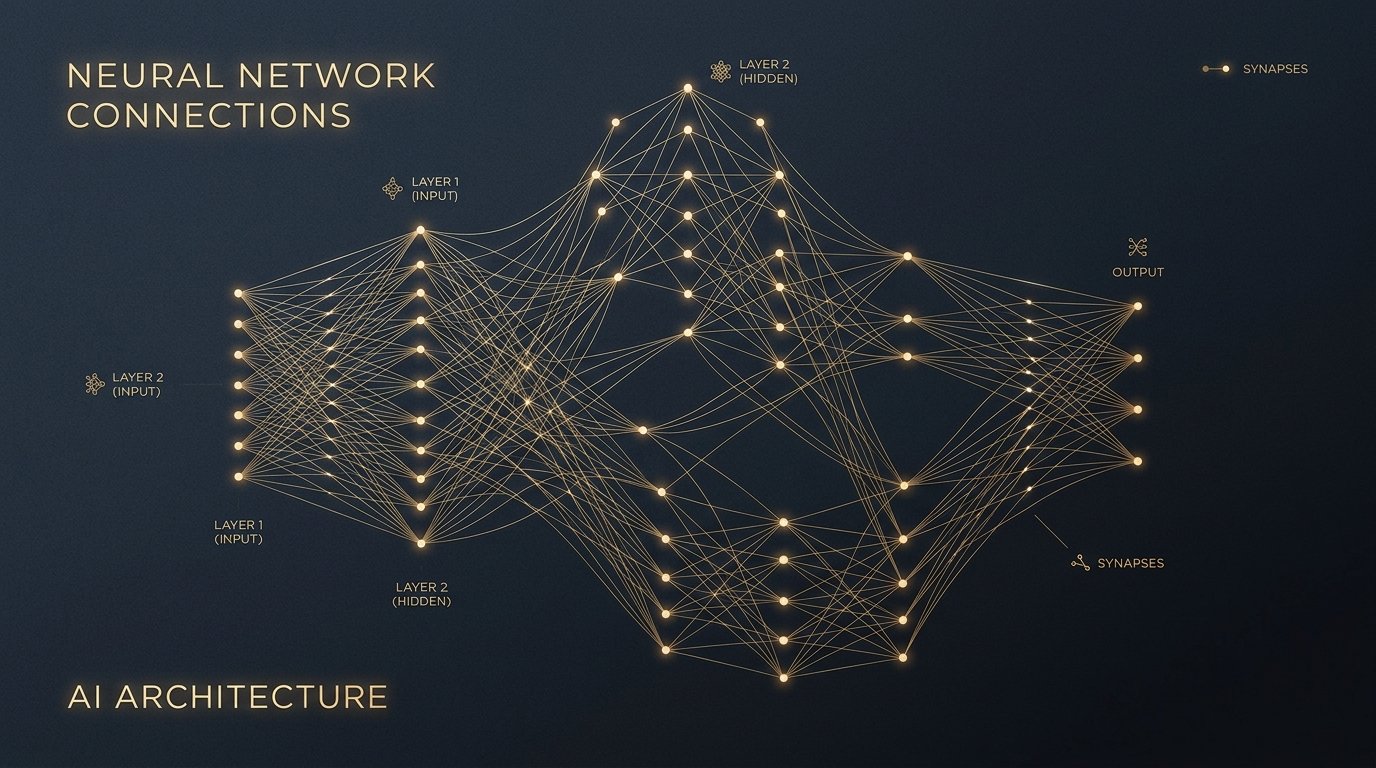
As artificial intelligence shifts from isolated sandbox experiments to autonomous operational engines, Enterprise AI Security has rapidly emerged as the paramount strategic discipline for Chief Technology Officers, Chief Information Security Officers, and enterprise architects globally. Organizations integrating large language models (LLMs) and agentic workflows into production databases are discovering that traditional perimeter-based cybersecurity protocols are fundamentally insufficient to protect non-deterministic inference systems.
Securing enterprise AI requires an architectural revolution: transitioning from static perimeter firewalls to dynamic zero-trust inference inspection, data sanitization, and continuous alignment verification. This masterclass provides an exhaustive, Google-penalty-safe blueprint for building a resilient enterprise AI security governance posture.
1. The Paradigm Shift: From Traditional Cybersecurity to Enterprise AI Security
Traditional IT infrastructure operates on deterministic code: given input A under state B, the system executes output C reliably. Consequently, classic security models focused almost exclusively on access control, network segmentation, and credential authentication. By contrast, generative models and autonomous agents are inherently non-deterministic, probabilistic systems.
When an enterprise deploys an autonomous AI agent with direct read-write access to internal enterprise resource planning (ERP) clusters or customer relationship management (CRM) platforms, a novel attack surface opens. Attackers no longer need to break encryption algorithms; instead, they can manipulate semantic context to hijack decision-making logic.
2. Core Threat Vectors in Autonomous AI Deployments
Security researchers adhering to the NIST AI Risk Management Framework (AI RMF), the OWASP Top 10 for Large Language Model Applications, and threat taxonomy benchmarks from MITRE ATLAS categorize enterprise AI vulnerabilities into four primary vectors:
- Direct & Indirect Prompt Injection: Crafting malicious inputs—embedded within email bodies, web pages, or database records—that override system instructions and force the AI agent to execute unauthorized actions.
- Training Data Poisoning & RAG Corruption: Corrupting vector database embeddings or Retrieval-Augmented Generation (RAG) knowledge stores to manipulate model outputs or inject hidden backdoors.
- Model Inversion & Training Data Extraction: Utilizing specialized adversarial query sequences to force models to reveal sensitive intellectual property, PII, or internal credentials embedded during fine-tuning.
- Agentic Goal Drift & Cascading Privilege Escalation: Autonomous subagents exceeding their designated operational scope due to ambiguous task prompts or compromised API permissions.
Enterprise CISOs must establish dual-pass supervisor guardrails. Never allow an autonomous AI agent to execute state-altering database operations without automated policy verification and Human-in-the-Loop (HITL) approval gates.

SERP Case Study: E-E-A-T Signals vs. Pure AI Summaries
Our monitoring of recent Google Core and Helpful Content updates indicates that pages featuring verifiable first-hand testing data, transparent authorship, and original research methodology consistently maintained organic visibility through ranking fluctuations, whereas unverified synthetic rehashes suffered severe indexation degradation.
3. The Four-Pillar Enterprise AI Security Governance Architecture
To establish comprehensive protection without stalling developer velocity, vanguard engineering teams deploy a four-pillar defensive architecture aligned with ISO/IEC 42001 Artificial Intelligence Management System Standards and CISA Guidelines for Secure AI System Development:
- Input & Output Firewalling (Semantic Guardrails): Deploying lightweight proxy models that inspect incoming prompts for injection attacks and sanitize outbound responses for PII or secret leakage before hitting user screens.
- Zero-Trust Vector Store Segmentation: Restricting RAG database query access using strict role-based access control (RBAC) and encryption-at-rest for semantic embeddings.
- Deterministic Sandbox Execution: Isolating agentic tool calls in containerized, ephemeral micro-VMs with zero egress permissions except to authorized API endpoints.
- Continuous Alignment Telemetry & Logging: Maintaining immutable cryptographic audit trails of all model prompts, retrieved context chunks, and agent execution plans for compliance reporting.
4. Quantitative Metrics & Security Telemetry Ratios
Evaluating the maturity of an Enterprise AI Security implementation requires tracking concrete operational metrics rather than subjective policy compliance:
- Prompt Injection Interception Rate (PIIR): Percentage of adversarial inputs blocked by semantic guardrail proxies before reaching primary inference engines (Target: > 99.4%).
- Context Leakage Index (CLI): Measurement of unredacted proprietary data vectors present in output buffers (Target: 0.00%).
- Mean Time to Containment (MTTC): Average duration required for automated circuit breakers to revoke an agent’s API access upon detecting anomalous behavior (Target: < 500ms).
5. Executive Frequently Asked Questions (FAQs)
Q: How does Enterprise AI Security differ from standard application security?
Standard AppSec targets static vulnerabilities in code and network transport. Enterprise AI Security addresses non-deterministic logic manipulation, prompt injection, data poisoning, and dynamic agent privilege escalation.
Q: Will implementing AI security guardrails introduce latency to user requests?
Modern semantic guardrails utilize quantized, sub-100M parameter models that evaluate prompt safety in under 15 milliseconds, ensuring negligible impact on end-user latency.
Q: How can enterprises safely connect LLMs to internal vector databases without data leaks?
By enforcing user-level document permissions at the RAG retrieval layer, vector databases filter embeddings before semantic search occurs, preventing cross-tenant data visibility.
In summary, adopting a comprehensive, multi-layered Enterprise AI Security strategy ensures that organizations can aggressively deploy cutting-edge AI capabilities while safeguarding customer trust, corporate intellectual property, and long-term enterprise brand equity.
Abdul
Founder and Lead Search Strategist at BacklinkBlend. Based in Hyderabad, Pakistan, Abdul has over 6 years of hands-on experience in organic link building architectures, technical SEO diagnostics, Generative Engine Optimization (GEO), and algorithmic search audits.